


Akasaka Historical Journey: A Private Walking Tour Through Tokyo's Aristocratic District
Step through the gates of Japan's first Western-style palace, walk the quiet inner precincts of an Edo-era Inari shrine, and explore a curated showroom of contemporary Japanese craft before a private lunch in Akasaka's historic ryōtei quarter.
Overview
Akasaka wears two coats. On its polished surface it is one of Tokyo's great diplomatic addresses, a district of corporate towers, foreign embassies, and the quiet motorcades of state guests gliding between guesthouses. A few streets back, in the lanes that fold away from the boulevards, the older town survives: pocket shrines, tucked-away machiya, and the karyukai quarter where geisha and the artists who lived alongside them once gave the district its other reputation, the one for refined restaurants and discreet wealth. The Edo-era samurai residences are long gone, but the embassies and the high-class eateries that took their place trace the same lines on the map.
The morning begins at JR Yotsuya Station, a short walk from the State Guest House, Akasaka Palace: Japan's first Western-style grand building, completed in 1909 for the then-Crown Prince Yoshihito with explicit reference to the architecture of Versailles. Construction stretched across roughly a decade and consumed a budget equivalent today to well over a hundred billion yen. The palace now hosts visiting heads of state and diplomatic summits, and on quieter mornings its ornate gates and gilded interiors are one of the most cinematic sights in Tokyo.
From the palace the route crosses to Toyokawa Inari Shrine, Tokyo Branch, established in the 18th century by the celebrated Edo magistrate Ooka Echizen-no-kami as the Tokyo seat of the great Aichi shrine. Stone foxes line the inner precinct in their hundreds, their carved expressions weathered by centuries of incense and rain, and the courtyard remains one of the city's most atmospheric places to pray for good fortune. A short walk away, Aoyama Square opens as a curated showroom of contemporary Japanese craft: more than 3,500 pieces sourced from workshops across the country, with a rotating programme of international artisan demonstrations that draws collectors and makers in equal measure.
The experience closes with a Japanese lunch at one of the historic Akasaka ryōtei restaurants that have, for more than a century, set the table for prominent politicians, artists, and visiting dignitaries, an atmosphere of lacquered counters, seasonal kaiseki courses, and the discreet service for which the district is known. From there it is a short, unhurried walk to Akasaka-mitsuke Station, where the tour concludes in the late afternoon.
Details
❖ Pick up at JR Yotsuya Station
09:45
Your guide meets you at the Akasaka exit of JR Yotsuya Station at 09:45. The State Guest House is a short walk from the platform.
❖ State Guest House, Akasaka Palace
10:00 - 11:00 (1:00 h)

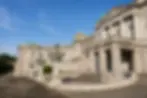
The first Western-style grand building constructed in Japan, completed in 1909 after nearly a decade of work for then-Crown Prince Yoshihito, the future Taishō Emperor. Designed by court architect Katayama Tōkuma, who studied under Josiah Conder, the palace draws on Buckingham Palace and the Palace of Versailles for its neo-Baroque silhouette and on Italian marble, French chandeliers, and lavish gold-leaf interiors for its detail. Designated a National Treasure in 2009, the first Meiji-era building to receive the honour, Akasaka Palace today serves as Japan's State Guest House, hosting visiting heads of state and the dinners of international summits.

Your guide leads you through the Front Gate flanked by its bronze knights and marble lions, across the gravel drive of the Front Garden where the central pond and pine arrangement set the formal scale of the residence, then into the Main House for the public rooms when openings allow. The route concludes in the Main Garden, a quieter contrast designed in the Japanese style, with views back to the cupola crowned by the statue of Yamato Takeru. Photography is permitted in the gardens; specific halls inside may be subject to restrictions on the day of visit.
❖ Toyokawa Inari Tokyo Branch
11:15 - 11:45 (30 min)
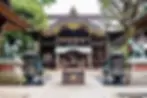
The Tokyo branch of the Inari shrine in Toyokawa, Aichi Prefecture, though in practice a Sōtō Zen Buddhist temple known as Myōgon-ji rather than a Shintō shrine. The Tokyo precinct was dedicated here in 1828 by Ōoka Echizen-no-kami Tadasuke, the legendary Edo magistrate immortalised in literature for his shrewd, even-handed judgments. The deity enshrined is Dakini-shinten, a guardian figure he had long venerated at his own residence and which he believed had quietly steered his career and household fortunes.

Pass through the main gate into the inner precinct, where row upon row of stone foxes, Inari's messengers, each wearing a small red bib offered by worshippers, line the path beneath cedar shade. The shrine has long drawn Akasaka's restaurant owners, entertainers, and businesspeople seeking favour in commerce and the arts. The rounds of red lanterns, votive paper foxes, and the still-burning incense at the main hall remain among the most photogenic religious tableaux in central Tokyo.

❖ Aoyama Square
11:55 - 12:30 (35 min)

A curated showroom operated by the Association for the Promotion of Traditional Craft Industries, displaying and selling more than 3,500 pieces of contemporary Japanese craft drawn from workshops across all 47 prefectures. The selection focuses on the Dentō Kōgeihin, nationally designated traditional crafts that meet strict criteria for the use of traditional techniques and locally sourced materials, often with lineages extending several centuries back.

From Wajima lacquerware and Edo Kiriko cut glass to Bizen pottery and Tokyo Ginki silverware, every piece is chosen for its capacity to last a century or more. Periodically, certified Dentō Kōgeishi masters demonstrate their craft on site, turning, lacquering, weaving, or chasing metal, offering a rare chance to watch refined skills passed down through generations and, where you wish, to acquire one of the works directly from the maker's bench.

❖ Japanese lunch in Akasaka
12:45 - 13:30 (45 min)

The day closes with a Japanese set lunch at one of the ryōtei restaurants that have shaped Akasaka’s reputation as the address of choice for politicians and celebrities. Lunch is paid separately on the day - your guide can recommend a course in advance to suit your appetite and budget.
❖ Tour ends at Akasaka-mitsuke Station
13:45
The tour wraps up at Akasaka-mitsuke subway station around 13:45, on the Ginza and Marunouchi lines.
OPTIONS
Notes
The State Guest House visitation covers the front garden, main house, and main garden.
Tour duration can be extended at a rate of 8,000 yen per group, per hour (10,000 yen per hour during high season).
Hotel pick-up and drop-off within the 23 wards of Tokyo is available as an optional add-on, selectable at checkout (Hotel Pick Up & Drop Off Service).
Meeting Point
Meet your guide at 09:45 outside the JR Yotsuya Station Akasaka exit. Your guide will be holding an Omakase Tours sign.
What's included:
English-speaking guide
Entrance fee to the State Guest House
Photos of tour participants
Local tax
What's not included:
Food and drinks
Hotel pick-up (available as optional add-on within 23 wards of Tokyo)
Free cancellation up to 8 days before the experience starts (local time)
Private experience
1
-
6
Participants
Tokyo
From ¥13,000 /person
4 hours
Traveler Photos


From ¥13,000 /person
4 hours
Tokyo